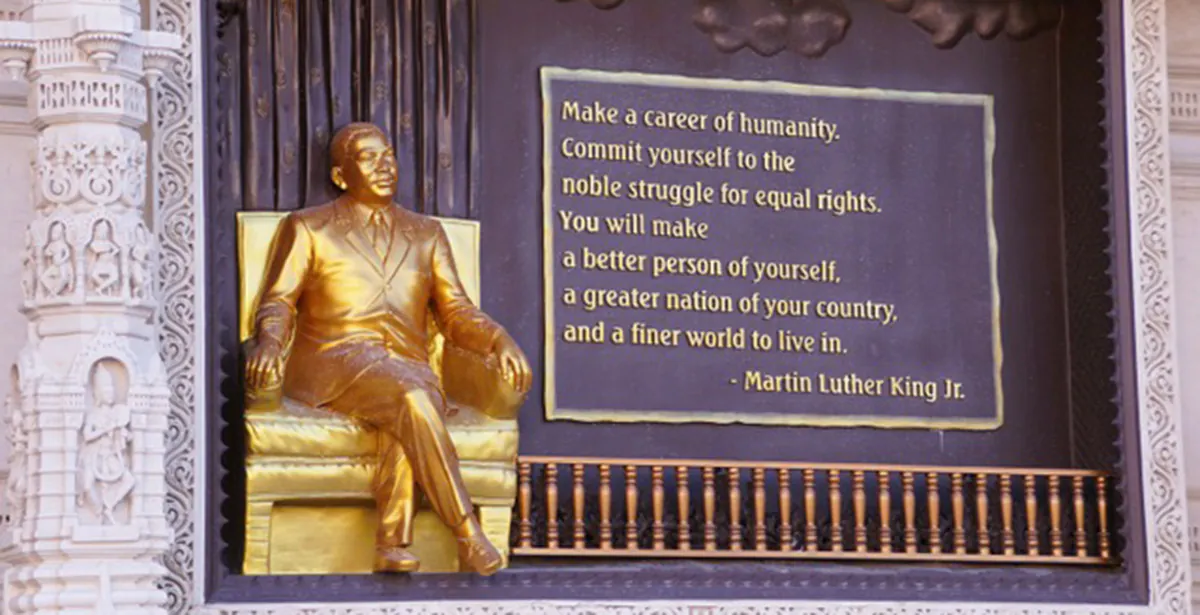
Martin Luther King Jr. Day reminds me how little time has actually passed between denied rights, hard-won progress, and the moment we’re living in now.
This is not a day off. It’s a day to remember.
It’s a day to remember that the rights many of us exercise today were neither accidental nor inevitable. They were fought for—often at great personal cost—by ordinary people who decided that injustice should no longer be tolerated.
My grandparents were born in 1901.
They lived in a United States where segregation was legal and enforced. Where Jim Crow laws dictated where you could live, work, learn, vote, or even sit. Where African Americans were systematically denied the right to vote through literacy tests, poll taxes, intimidation, and violence—despite what the Constitution said on paper.
My parents were born in 1921 and 1928.
They came of age during a time of upheaval and courage. They witnessed the Civil Rights Movement and the passage of landmark legislation—the Civil Rights Act of 1964, the Voting Rights Act of 1965, and the Fair Housing Act of 1968. These laws did not magically create equality, but they did something essential: they made civil rights enforceable.
Here’s a simple illustration of how recent—and fragile—these rights really are for African Americans:
My grandmother, born in 1901, lived most of her adult life with voting rights that existed in theory but not in practice. It wasn’t until the Voting Rights Act of 1965, when she was in her 60s, that her right to vote was meaningfully protected by federal law.
My mother, born in 1921, reached voting age long before equal access was guaranteed. Whether she could vote freely depended largely on where she lived and what barriers she was forced to overcome.
I was 18 when I could vote. No literacy tests. No poll taxes. No threats. Voting was expected. Ordinary. Accessible. That normalcy exists only because others refused to accept exclusion as normal.
These histories are not abstract or exaggerated. They are lived experiences.
They may not be our personal experience, but they are someone’s — and they shaped the world we inherited.
History doesn’t change because we’re uncomfortable with it.
And this is where I find myself today.
I don’t understand why some people believe they must keep others down in order to raise themselves up.
I don’t understand how we have grown comfortable choosing certainty over curiosity, judgment over understanding.
I don’t understand when we stopped asking for better choices—and started defending the ones we’re given, even when they pull us away from our shared humanity and respect for one another.
I don’t understand how an either/or mentality can move us forward in a world that is complex, diverse, and deeply human.
And I don’t understand why debate—designed to win—has replaced conversation—designed to learn.
But here is what I do believe.
God loves everyone you see.
Not people who look like us.
Not people who vote like us.
Not people who agree with us.
Everyone.
And our work—our responsibility—is to learn how to love them too.
Progress doesn’t disappear all at once.
It erodes through choices, actions, and inaction.
Through silence. Through comfort. Through the decision to look away.
Every generation is tested—not by what it claims to value, but by what it is willing to protect.
Martin Luther King Jr. Day isn’t about honoring a man.
It’s about deciding who we will be when dignity, truth, and love require something of us.